University of Adelaide Nexus 10 AI/VR Hub
Custom Designed, Australian Built Lighting for Immersive Research
- South Australia
- 2026
- Education
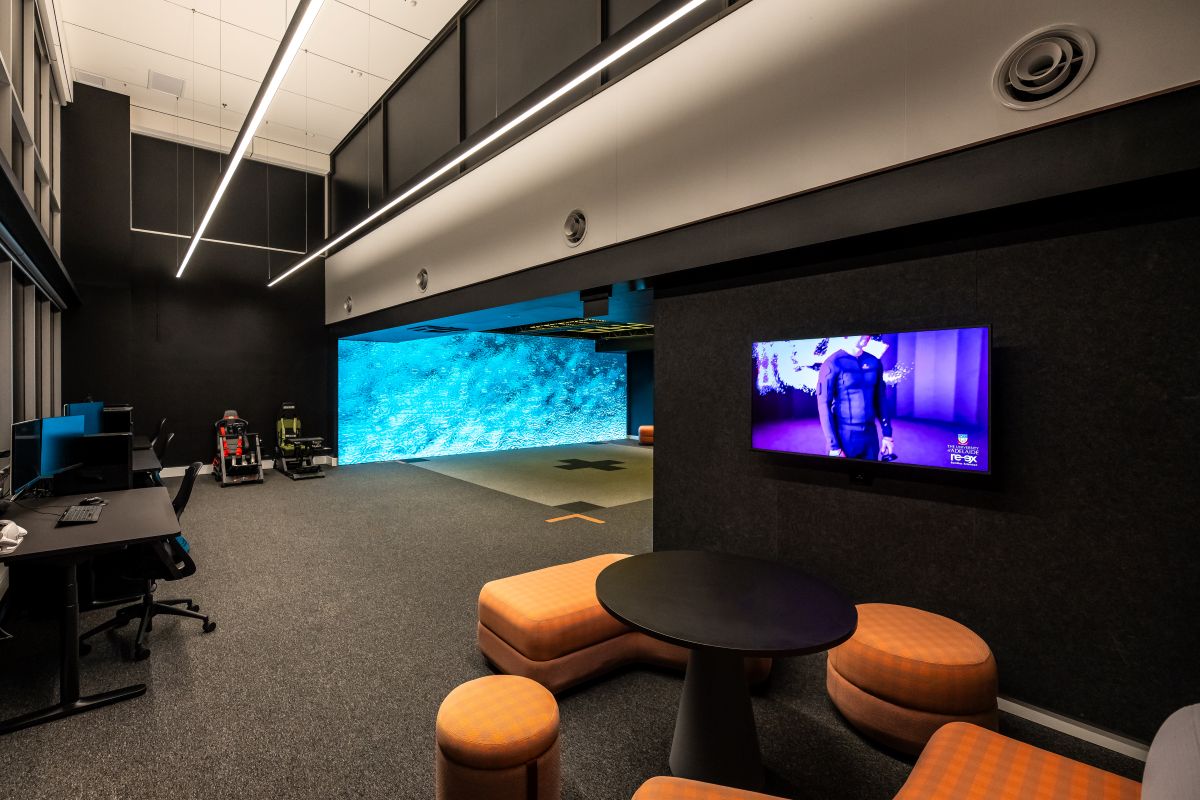
The Australian Lab for Immersive Technologies (ALIT), housed within the University of Adelaide’s Nexus 10 building on North Terrace, is one of Australia’s most advanced facilities for immersive virtual reality, artificial intelligence, and simulation research. Designed as a fully integrated environment, ALIT brings together cutting‑edge tools for interactive display, motion tracking, digital performance, and data‑driven simulation, enabling researchers, students, and industry partners to explore new frontiers in human computer interaction and immersive technologies.
Purpose‑built to support academic research, industry collaboration, performance, and teaching, ALIT serves as the home of the University’s immersive technology and research service alongside selected researchers and students. By uniting VR, AI, and simulation capabilities under one roof, the lab provides a dynamic space for innovation, experimentation, and the development of next‑generation digital experiences.
Lighting Design
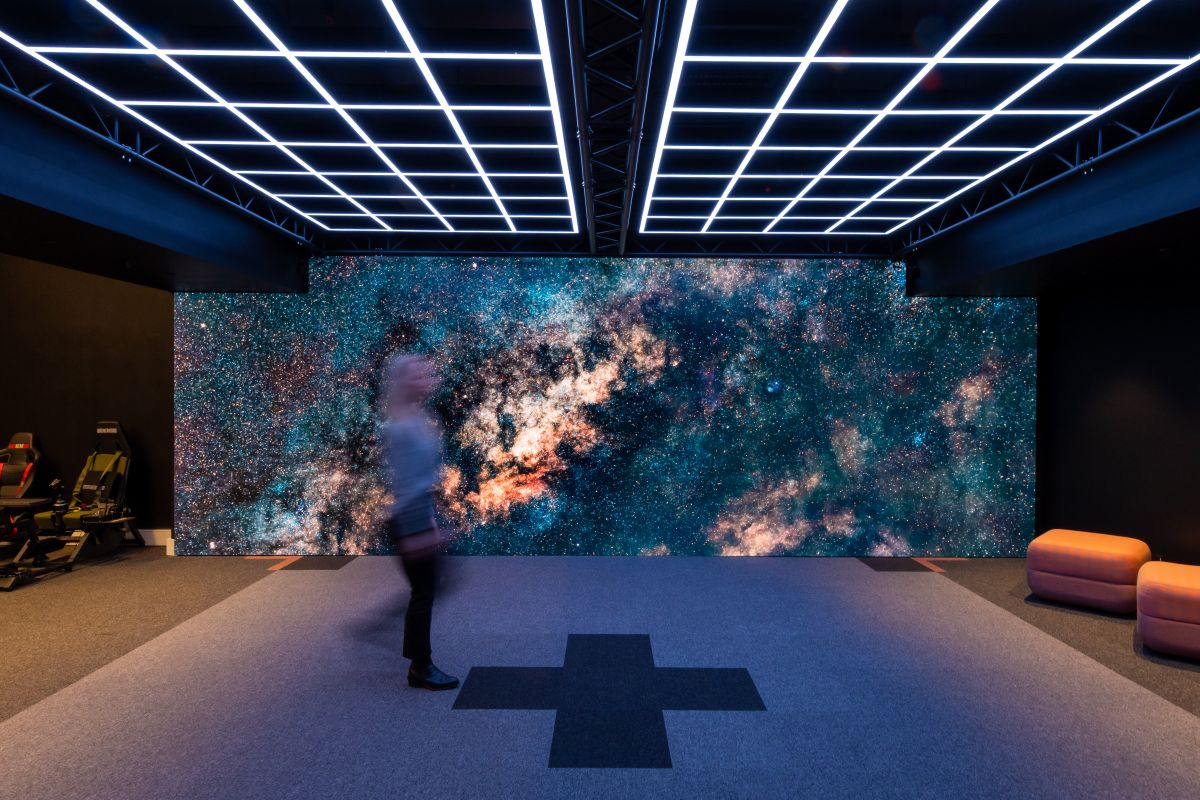
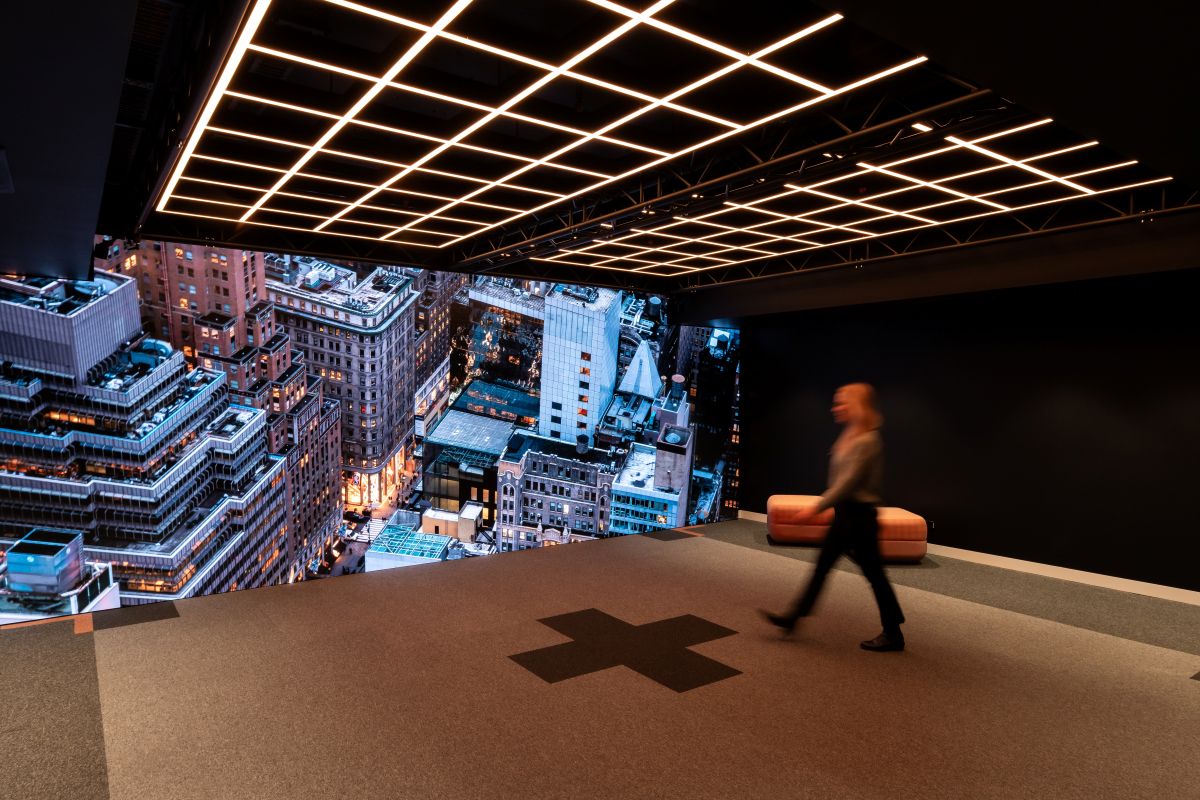
The lighting design brief involved two custom suspended illuminated grids that would appear as continuous lines of light floating above the VR environment. HI Lighting collaborated closely with Australian lighting manufacturer, Digilin Technologies, to create a tailored lighting solution that addressed the project’s significant technical and design challenges. The system needed to integrate seamlessly with the suspended services grid while delivering dynamic RGBW lighting under DALI control, allowing the ceiling to respond to changing virtual environments and create a fully immersive space. The design required a bespoke solution that could deliver uninterrupted illumination across intricate geometric junctions, maintain structural integrity, and interface cleanly with the grid. Rather than assembling standard linear luminaires into a grid, Digilin engineered a purpose-built version of its Space 35 linear platform, incorporating custom fabricated L, T and X junctions that maintained perfectly continuous illuminated lines throughout the entire structure.
Technical Execution and Challenges
From an engineering perspective, the project presented significant complexity. The complete lighting system operates on a constant-voltage RGBW platform with DALI control, allowing the illuminated ceiling to synchronise with the immersive digital content throughout the AI/VR Hub.
Multiple power supplies and repeaters were distributed across the assembly groups to simplify wiring while maintaining uniform performance across the entire installation. The architecture was also designed with future flexibility in mind, allowing migration to DMX control through a straightforward change of the primary control device should the University’s requirements evolve.
“Perhaps the greatest success of the Nexus AI/VR Hub is that none of this engineering is immediately visible. Visitors entering the space simply experience an elegant illuminated ceiling that complements the massive LED display and enhances the immersive environment.
Behind that simplicity lies months of collaboration between designers, engineers and manufacturing specialists, solving challenges in electronics, optics, mechanics, installation and control. Every custom junction, concealed connector, factory-tested assembly and detailed installation procedure contributed to a lighting system that performs as one continuous architectural element.” Tremaine Wrigley, Digilin Technologies.
Intersection Challenge
The greatest technical lighting design challenge was the intersections. Every crossover required the LEDs to continue uninterrupted in four directions while maintaining consistent brightness, colour mixing and optical performance. Simply joining separate luminaires would have created visible dark spots, inconsistent diffusion and complicated installation.
Digilin designed custom PCB layouts that allowed the RGBW circuitry to flow seamlessly through every intersection. This demands a high level of level of precision, with each junction individually assembled, soldered and tested to ensure colour consistency and uninterrupted illumination before the diffuser was installed. Equally important was the optical design. Careful calculations were undertaken to determine the ideal LED spacing and mounting depth so adjacent beams blended together before reaching the diffuser, producing continuous lines of light without visible segmentation.
Installation
With a complex design comes an equally complex installation, delivered with precision by the team at EDC Expert Group. The install was delivered within a 48 hour timeframe, requiring precise coordination between all stakeholders to ensure personnel, equipment, and sequencing were aligned. BIM modelling was utilised to ensure the system would fit and function in the space.
A key challenge was the installation of the large custom-fabricated light fitting, which formed a significant feature within the space. Due to its size and bespoke design, the fitting required careful planning, specialised handling, and precise alignment to achieve the intended architectural outcome.
“It was rewarding to contribute to a cutting-edge learning and innovation space that will support students, researchers, and industry collaboration for years to come.” Matt Moseley, EDC Group.
EDC’s ability to deliver a highly customised installation under significant time constraints while maintaining exceptional workmanship, was instrumental to the success of the overall completed space.
Project Outcome
The ALIT project represents a seamless blend of advanced technology, thoughtful design, and highly coordinated execution. Every stakeholder played a vital role in creating a space that is both architecturally refined and technologically advanced. The result is an immersive environment that elevates the University of Adelaide’s capabilities in VR, AI, and simulation research, supporting cutting‑edge learning, industry engagement, and digital experimentation for years to come. This project not only showcases the strength of Australian design and manufacturing but also demonstrates how thoughtful integration of lighting, technology, and craftsmanship can transform the way immersive learning environments are experienced.
- University of Adelaide
- Digilin Technologies
- EDC Expert Group
- Walter Brooke
- WSP
- Shape Australia
- Trim Photography